Skip to content
Authorized Suzhou distributor · Xinya Electronic Co., Ltd. 📞 +86 15862457677 📫 [email protected]
Xinya AWM Wire Authorized Suzhou distributor · Xinya Electronic Co., Ltd.

EV High Voltage Harness | Battery Pack Assembly

High-voltage EV and battery pack harnesses: 1000–1500 V DC rated wire, shielded runs, HVIL connector integration and dielectric testing to your drawing.
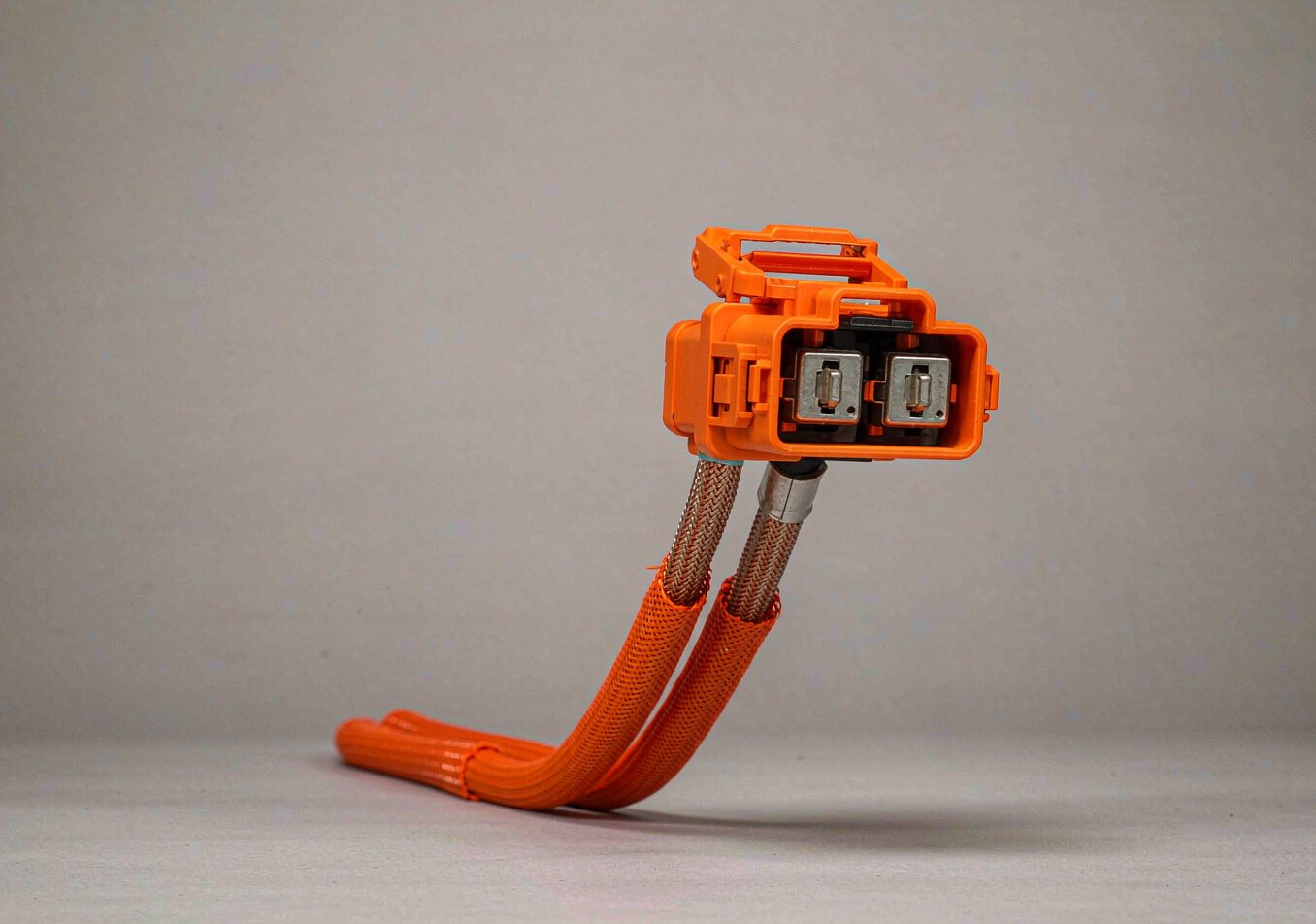
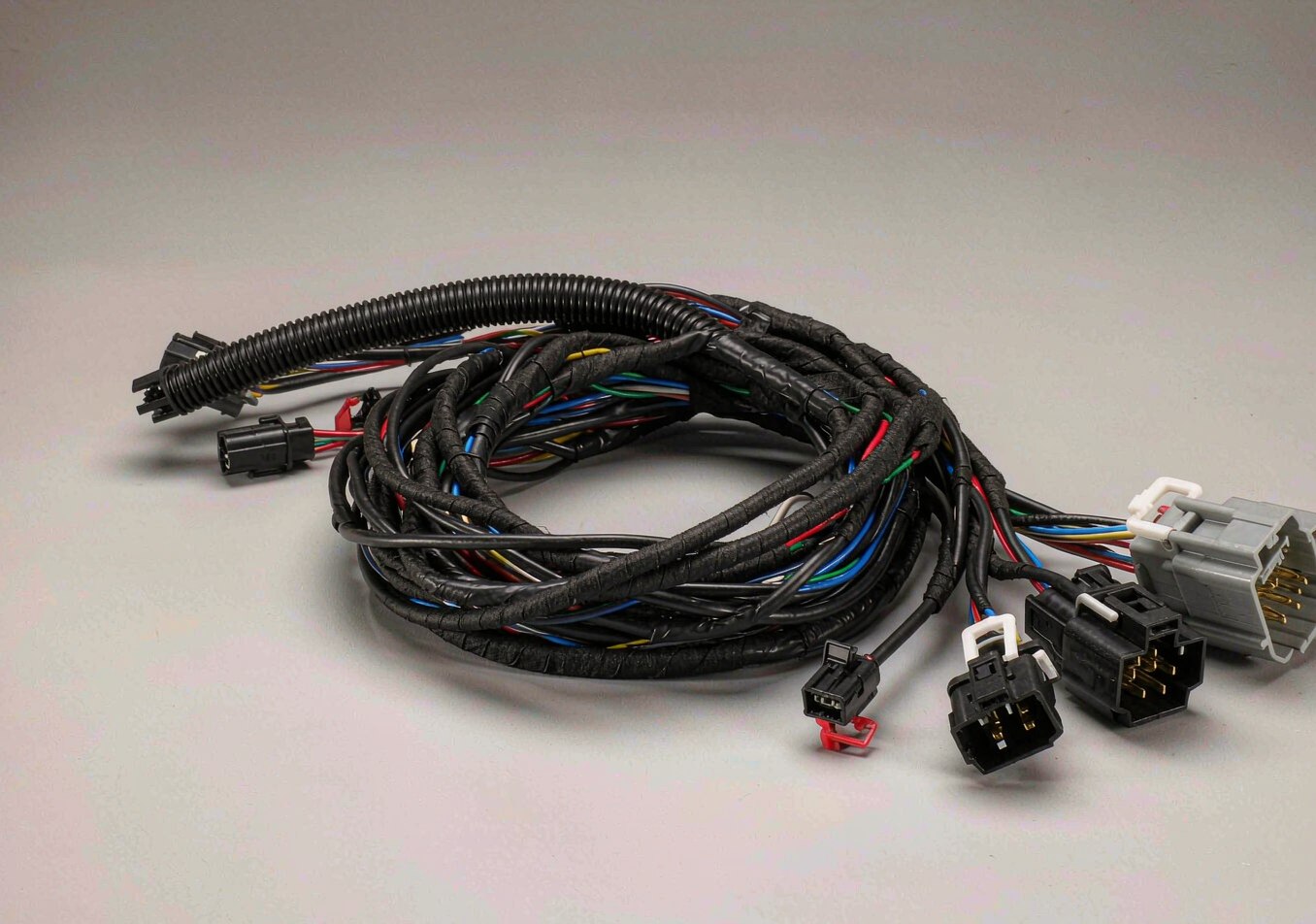
EV high-voltage battery harness with orange high-voltage connectors
Made to drawing. No prices are published and there is no cart. Send the drawing, a sample or a list of from-to points and we will quote the wire, connector, crimp and test method in writing.

EV High-Voltage & Battery Pack Harness: what we build

Traction voltage changes the whole assembly. The power conductor has to be sized and stranded for a flexible route at 1000 or 1500 V DC, the shield has to be terminated deliberately rather than left floating, and the creepage between the power core and anything adjacent has to survive the dielectric test the pack will be subjected to.

We build the power pair and the sense lines as one assembly where the drawing allows it, because a separate low-voltage harness alongside a high-voltage run is a second routing problem and a second failure mode. The interlock loop is wired and verified with the same continuity record as the power circuits, so an HVIL fault shows up at our bench rather than at your end-of-line test.

The wire named on the drawing governs the rest. UL 4703 photovoltaic wire and H1Z2Z2-K are both 1.5 kV DC rated and both sit in this catalogue with their certificate references published, so the harness can be traced back to a documented component rather than a generic orange cable.

How we build it

  • Power pairs, sense harnesses and HVIL loops assembled as one part where the drawing permits
  • Shield terminated to a defined drain or ground point, not left floating
  • Orange circuit identification and printed voltage marking per drawing
  • Dielectric withstand and insulation resistance measured and recorded
  • Continuity, polarity and interlock-loop verification on every assembly
  • Corrugated conduit, braided sleeve and high-temperature boot options for routing

Wire we build this harness on

Every conductor is Xinya wire from this site's own catalogue, so the style inside the harness can be traced to a published data sheet. These are the lines most often specified for this application:

If your drawing names a style that is not listed here, ask — the catalogue published on this site is a subset of what the factory runs, and we can quote against a style number as easily as against a description.

How to get a quotation

Send the drawing, the sample, a photograph with a scale in shot, or a table of from-to points. Our reply names the wire style, the connector series, the crimp specification, the sleeving and the test method, so your engineers can approve the part rather than interpret a description. Nothing on this site carries a price: every harness is quoted against the specification you provide.

Request a harness quotation Not sure which wire? Use the wire selector
Questions buyers ask about ev high-voltage & battery pack harness

Which wire do you use for a 1000 V DC battery pack harness?

UL 4703 photovoltaic wire at its 1000 V rating or H1Z2Z2-K to EN 50618 at 1.5 kV DC both work, and both are listed in this catalogue under the UL PV and TUV PV wire series with their certificate records cited. The choice usually comes down to which approval your pack has to satisfy.

Can the sense harness be supplied separately from the power cables?

Yes. Some customers take the sense and interlock assembly on its own and terminate the power lugs in-house, because the power cable is often cut to length after the pack is built. We quote either way.

Do you test the harness at voltage?

Where the drawing specifies it, yes: dielectric withstand and insulation resistance are applied and recorded against the lot. Tell us the test voltage and duration you need and it goes on the routing sheet.

How is the shield handled?

A shield that is not terminated is a tuning stub, not a shield. We terminate the braid to the ground point your drawing nominates, or bring it out to a defined drain lead if the assembly continues into another part of the vehicle.

Is flexible stranding available on the power conductor?

Yes, and for a routed high-voltage cable it is worth specifying. Class 5 and class 6 stranding tolerates the bend radius the route actually imposes, where a stiff conductor will load the lug rather than the cable.

Other Automotive & Transport harnesses

Request a quotation for this harness

Tell us the style, AWG, colour and quantity — or attach nothing and just describe the requirement. We reply to every enquiry.

We use your details only to answer this enquiry. No prices are published on this site.

No file chosen

Accepted: PDF, Word, Excel, CSV, image, DWG, DXF or ZIP up to 10 MB.

Questions & answers

Frequently asked questions

Certifications, lead time, payment, shipping and MOQ — the points buyers ask about most often. If something is still unclear, send us your requirement and we will answer directly. See the full FAQ →

01 Are you a manufacturer or a trading company?

We are a wire harness manufacturer — cutting, stripping, crimping, sealing and testing are all carried out in-house at our Suzhou plant. We are also an authorised distributor of Xinya brand electronic wire, so you can source both the wire and the finished harness from one supplier.

02 What certifications do your electronic wires have?

Our electronic wires carry UL, VDE, PSE and CE approvals, together with RoHS and REACH compliance for the European market; TUV approvals are available for PV and renewable-energy wire. Certificates and test reports are issued by the manufacturer and can be supplied with your quotation on request.

03 How long is the lead time?

For electronic wire, popular styles such as UL1007, UL1015, UL1061 and UL1569 are normally available quickly; other styles, non-standard colours and cut lengths usually take around 7 days. Wire harnesses are made to order, so the schedule depends on your drawing, connector availability and quantity — we confirm it in the quotation.

04 What are your payment terms?

We commonly accept T/T (telegraphic transfer), PayPal and Western Union. Typically a 30% deposit is required before production, with the balance paid before shipment.

05 How do you ship the goods?

Samples and small orders are shipped by international express (DHL, FedEx, UPS, TNT) or by air freight. Larger orders normally go by sea to reduce freight cost. We can quote EXW, FOB, CIF or door-to-door terms and will recommend the option that best fits your budget and delivery date.

06 Do you have a minimum order quantity (MOQ)?

We keep a low MOQ to support your business. Generally the MOQ is 1 piece for standard models, although it may vary slightly for customised products. Small trial orders are welcome.

07 Can you build harnesses to our own drawing or sample?

Yes. We build to print and build to sample — send us a 2D drawing, a BOM, connector part numbers or even a photo of the part in use, and we will assemble, test and quote accordingly.

08 Can I get a sample before placing a bulk order?

Yes. We are happy to build a prototype first so that you can approve the fit, crimp and finish before committing to volume. Send the drawing and the target quantity and we will quote sample cost and lead time.

09 What information do you need to give a quotation?

For wire: the style or UL number, AWG, voltage and temperature rating, insulation, conductor, colour and length. For harnesses: the drawing or BOM, connector brand and part number, terminal and housing type, wire specification, cut length and tolerance, sleeving or tubing, label and packaging requirements, quantity and destination. If anything is unclear we will ask — or propose a construction for you.

10 Do you support OEM / ODM and private labelling?

Yes. We work with customer-specified connectors and brands as well as JST, Molex and HongXing, and can add printed markers, custom labels, printed bags and your own carton artwork for OEM and ODM projects.

11 How do you control quality?

Every order goes through incoming wire inspection, cutting and stripping checks, crimp height and terminal pull-force testing, 100% continuity and open-and-short testing, and a final dimensional and visual inspection. Inspection records can be supplied with the shipment when your project requires them.

12 Can you help with wire and connector selection?

Yes — our engineers help match wire gauge, insulation and temperature rating to your current, voltage and working environment, and select a terminal and housing combination that crimps reliably. Describe the application or send a sample and we will propose a construction.

13 Can you supply cut lengths and custom packaging?

Yes. Wire can be supplied in cut lengths, coils or spools, with PE bags, cartons, pallets and printed labels arranged to suit your warehouse or production line.

14 Do you ship worldwide, and can I visit the factory?

We ship worldwide, with regular shipments to Europe, North America, South-East Asia, the Middle East and Australia. You are welcome to visit our plant in Suzhou, and you can see our production lines in the factory videos on this site.

15 What happens if there is a quality problem after delivery?

Contact us with the order or batch number and photos of the issue. We will check it against our production and inspection records and, where the fault is confirmed on our side, arrange replacement or credit.

Need wire to a specification?

Send the style, AWG range, colour and length — or your BOM and drawing. We will come back with construction, availability and lead time. This catalogue publishes no prices; every enquiry is quoted directly.

Request a quote