LED Lighting Harness | Fixture Wiring Assembly
LED lighting and fixture harnesses: driver-to-board leads, high-temperature fixture wire and IP-rated connectors for indoor and outdoor luminaires.
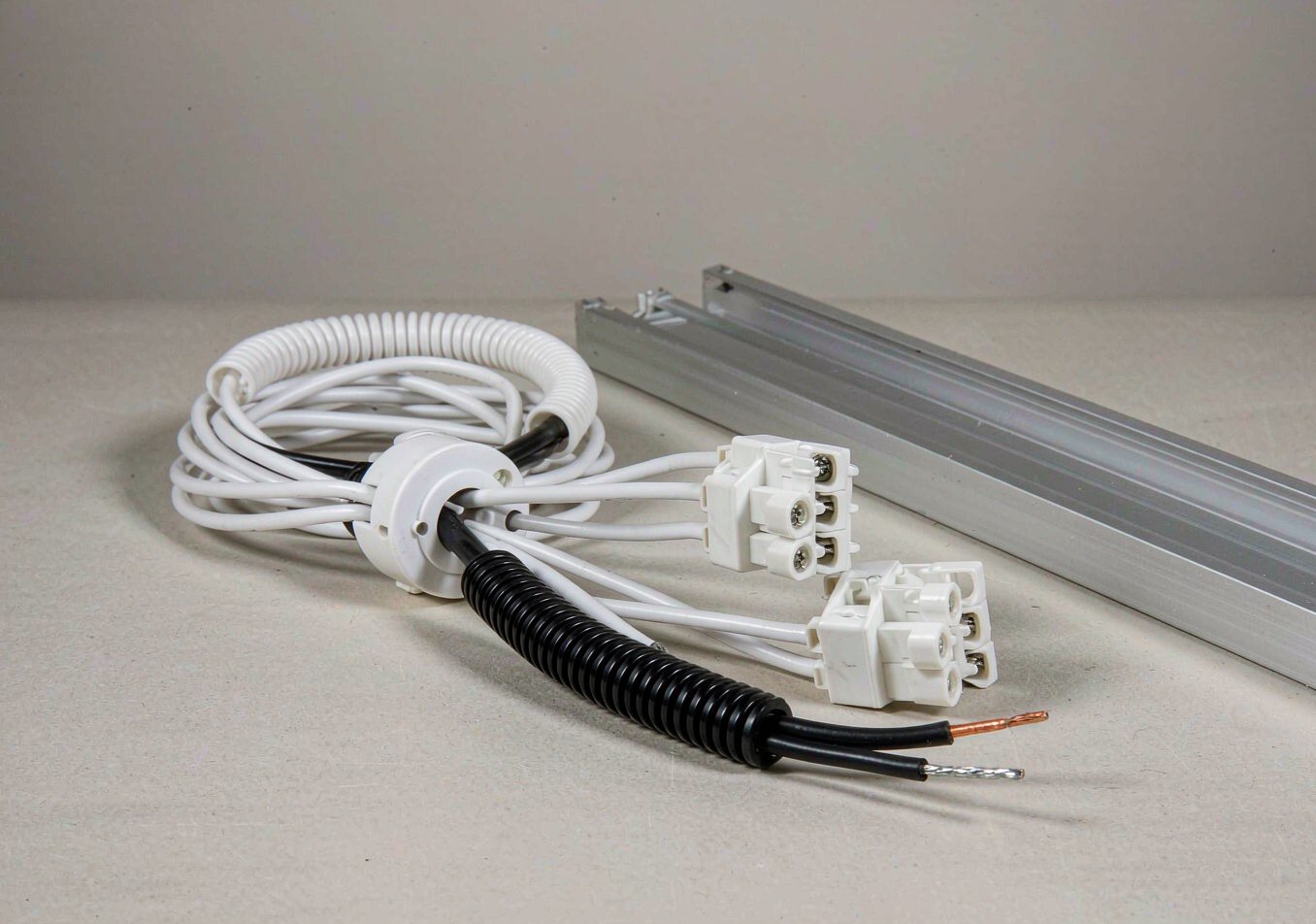
LED Lighting & Fixture Harness: what we build
An LED luminaire puts a connector lead within a few millimetres of a surface running at 80 to 120 °C, and the wire has to live there for the life of the fitting. That is why the fixture lead is rarely the same wire as the mains input lead, even though both are inside the same housing.
The catalogue already carries the two styles this application usually needs: UL3485, a 600 V fixture wire rated to 150 °C, and the FEP fluoropolymer lines at 200 °C where the lead sits directly across a hot board. Where the run is cooler, a 105 °C halogen-free mPPE wire works and keeps the smoke contribution down.
Outdoor and industrial luminaires add a second requirement. The lead and the connector have to survive water ingress at the gland, so the assembly is built with an IP67 or IP68 connector series and a potted or over-moulded entry rather than a plain crimp behind a gasket.
How we build it
- Driver-to-board leads rated for the temperature at the board, not at the terminal
- IP67 and IP68 connector options with potted or over-moulded cable entry
- Dimming and control pairs shielded where the driver is a dimmable type
- Polarity checked and marked on every DC lead before packing
- Silicone and fibreglass sleeving at the hot end of each lead
- Board-plug terminations crimped with connector-series tooling
Wire we build this harness on
Every conductor is Xinya wire from this site's own catalogue, so the style inside the harness can be traced to a published data sheet. These are the lines most often specified for this application:
- UL3485 600 V 150 °C fixture wire
- UL1330 FEP wire, 200 °C
- UL1331 FEP wire, 150 °C
- UL11027 halogen-free mPPE wire
- UL1015 600 V PVC hook-up wire
- UL2464 shielded cable for dimming and control
If your drawing names a style that is not listed here, ask — the catalogue published on this site is a subset of what the factory runs, and we can quote against a style number as easily as against a description.
How to get a quotation
Send the drawing, the sample, a photograph with a scale in shot, or a table of from-to points. Our reply names the wire style, the connector series, the crimp specification, the sleeving and the test method, so your engineers can approve the part rather than interpret a description. Nothing on this site carries a price: every harness is quoted against the specification you provide.
Request a harness quotation Not sure which wire? Use the wire selector