Industrial Control Harness | Machine Wiring Loom
Industrial control and machine wiring harnesses: ferruled conductors, numbered circuits, DIN and push-in terminations built to your panel or machine schematic.
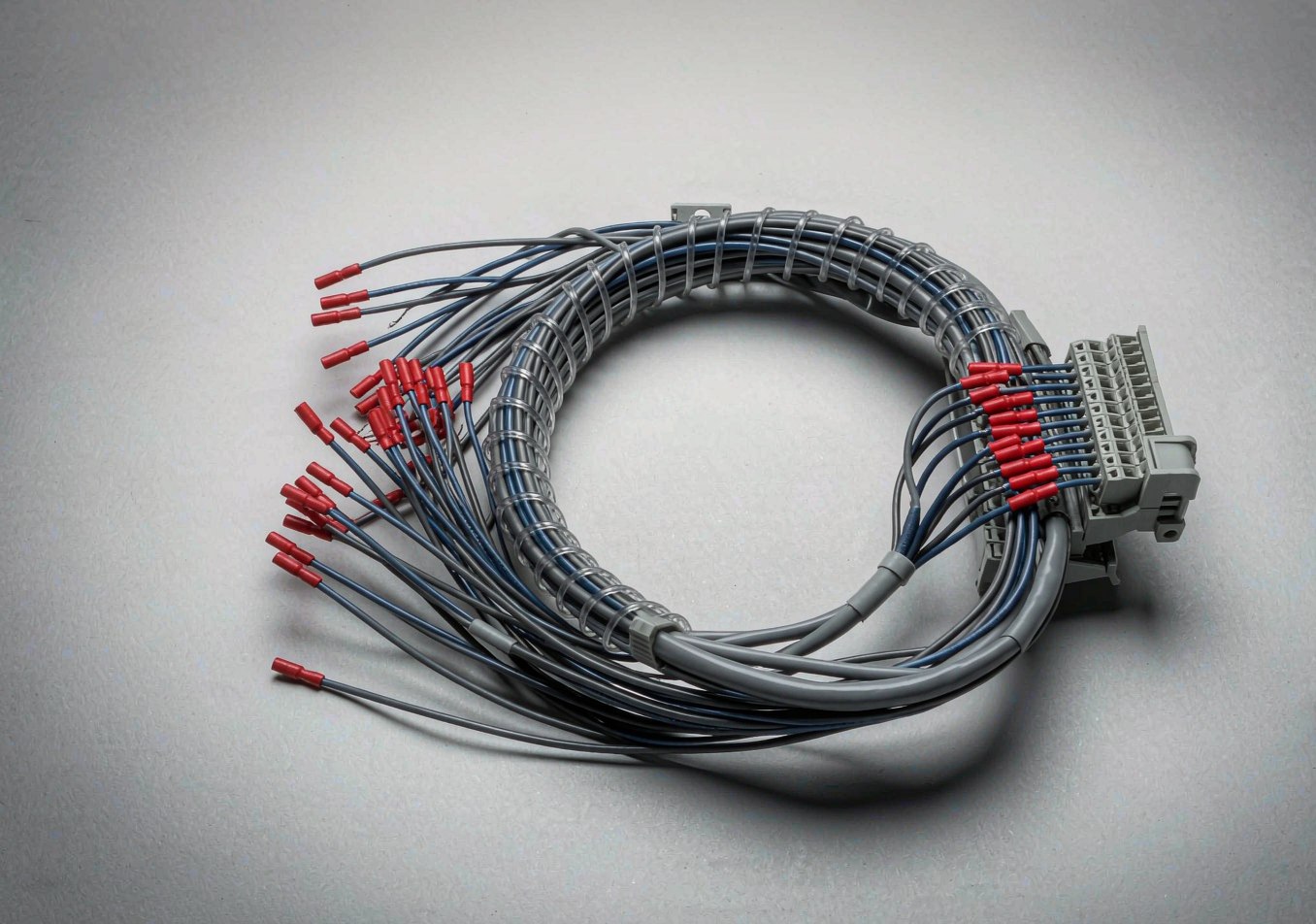
Industrial Control & Machine Harness: what we build
Most panel wiring failures are not electrical at all — they are a conductor that was pushed into a terminal with a few strands folded back, or a wire that was identified by position because nobody marked it. Pre-forming the loom in our workshop removes both problems from your assembly line.
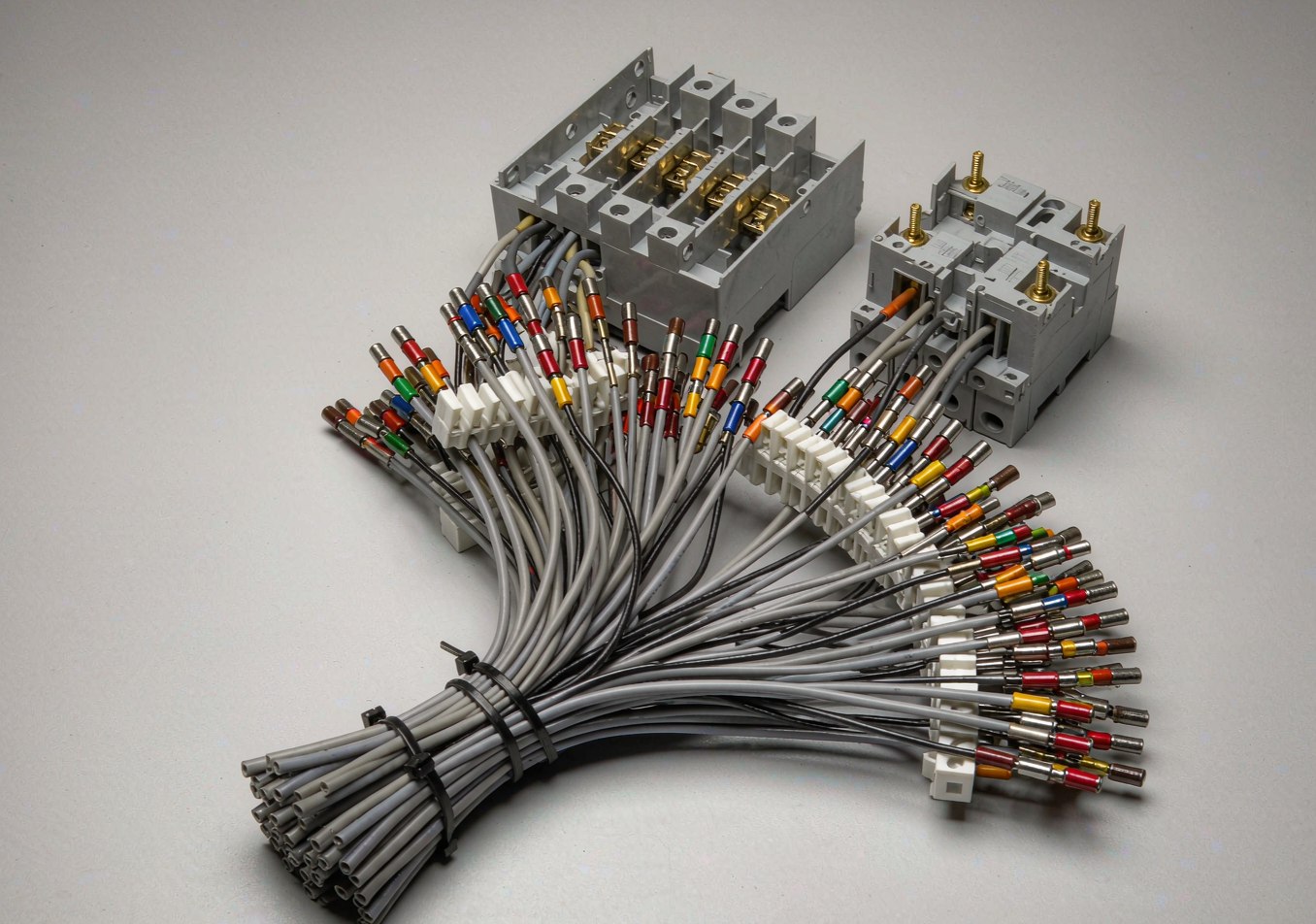
Every stranded end that lands in a DIN rail terminal gets a bootlace ferrule, crimped with the profile the terminal was designed for, in the colour code that matches the conductor size. This is slower than pushing bare wire into a cage, and it is the single most effective change you can make to the reliability of a control panel.
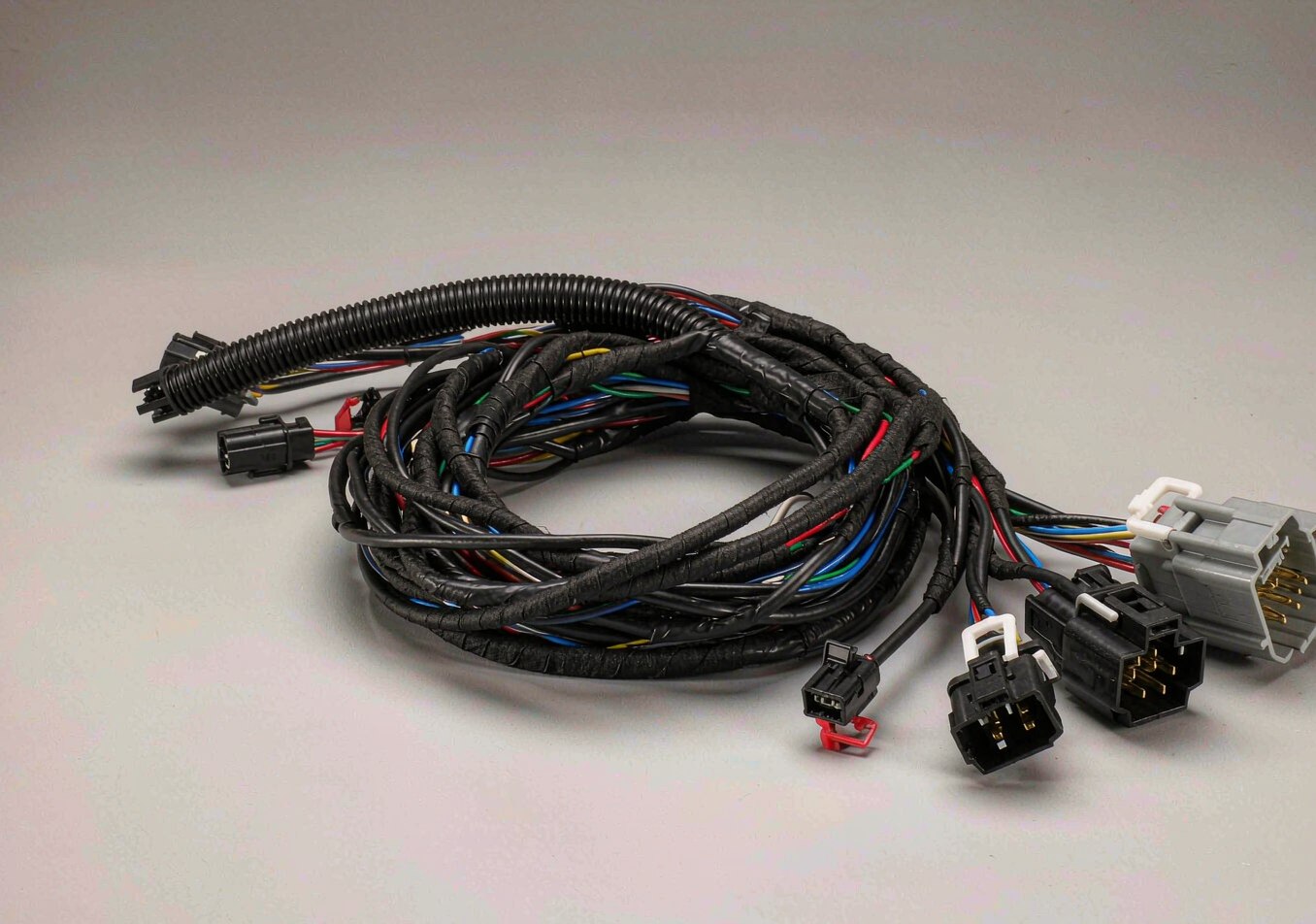
Circuits are identified by printed number or printed sleeve to your schematic, grouped into the routing the duct will accept, and tested for continuity point to point. The loom arrives as a part that drops into the panel, not as a bundle of wire that someone has to interpret.
How we build it
- Bootlace ferrules crimped on every stranded conductor landing in a DIN terminal
- Printed wire numbers and sleeves keyed to your schematic
- Branches, daisy chains and common rails pre-formed into the loom
- Shielded sections for analogue signals and encoder feedback
- Continuity verified point to point against the terminal list
- Duct-friendly bundling with the bend radii the panel actually imposes
Wire we build this harness on
Every conductor is Xinya wire from this site's own catalogue, so the style inside the harness can be traced to a published data sheet. These are the lines most often specified for this application:
- UL1015 600 V PVC hook-up wire
- UL1028 600 V PVC hook-up wire, to 8 AWG
- H05V-K 300/500 V harmonised cable
- H07V-K 450/750 V harmonised cable
- UL2464 shielded multi-conductor cable for signals
- UL2103 105 °C multi-conductor cable
If your drawing names a style that is not listed here, ask — the catalogue published on this site is a subset of what the factory runs, and we can quote against a style number as easily as against a description.
How to get a quotation
Send the drawing, the sample, a photograph with a scale in shot, or a table of from-to points. Our reply names the wire style, the connector series, the crimp specification, the sleeving and the test method, so your engineers can approve the part rather than interpret a description. Nothing on this site carries a price: every harness is quoted against the specification you provide.
Request a harness quotation Not sure which wire? Use the wire selector