Switchgear Wiring Harness | Control Panel Loom
Pre-formed switchgear and control panel looms: ferruled conductors, printed circuit identification and 600–1000 V wire assembled to your wiring schedule.
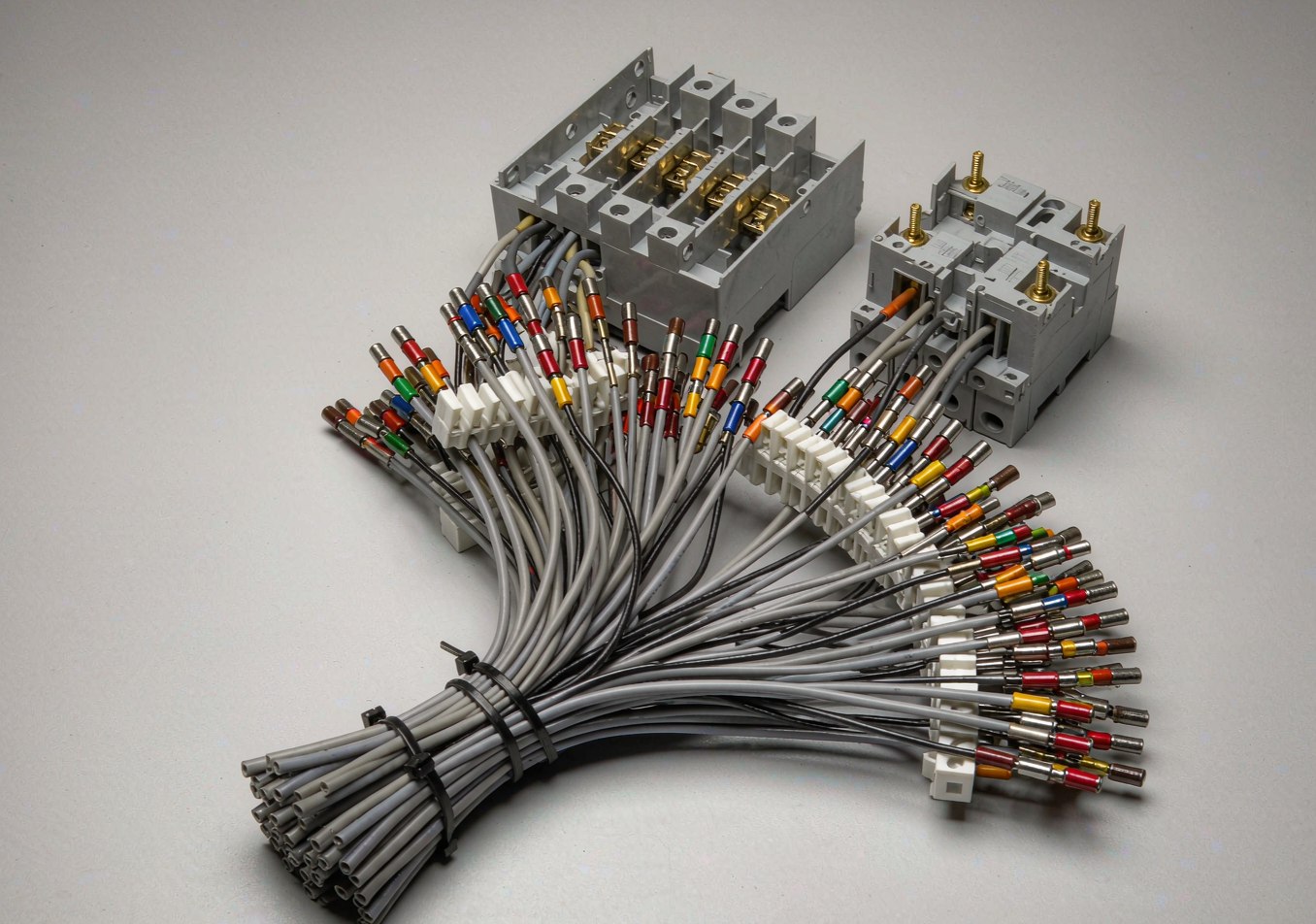
Switchgear & Control Panel Harness: what we build
Panel wiring is where a project runs out of time. Pre-forming the looms moves that work from a crowded switchroom to a bench where the conductor can be stripped, ferruled, measured and tested without anyone standing on a step ladder.
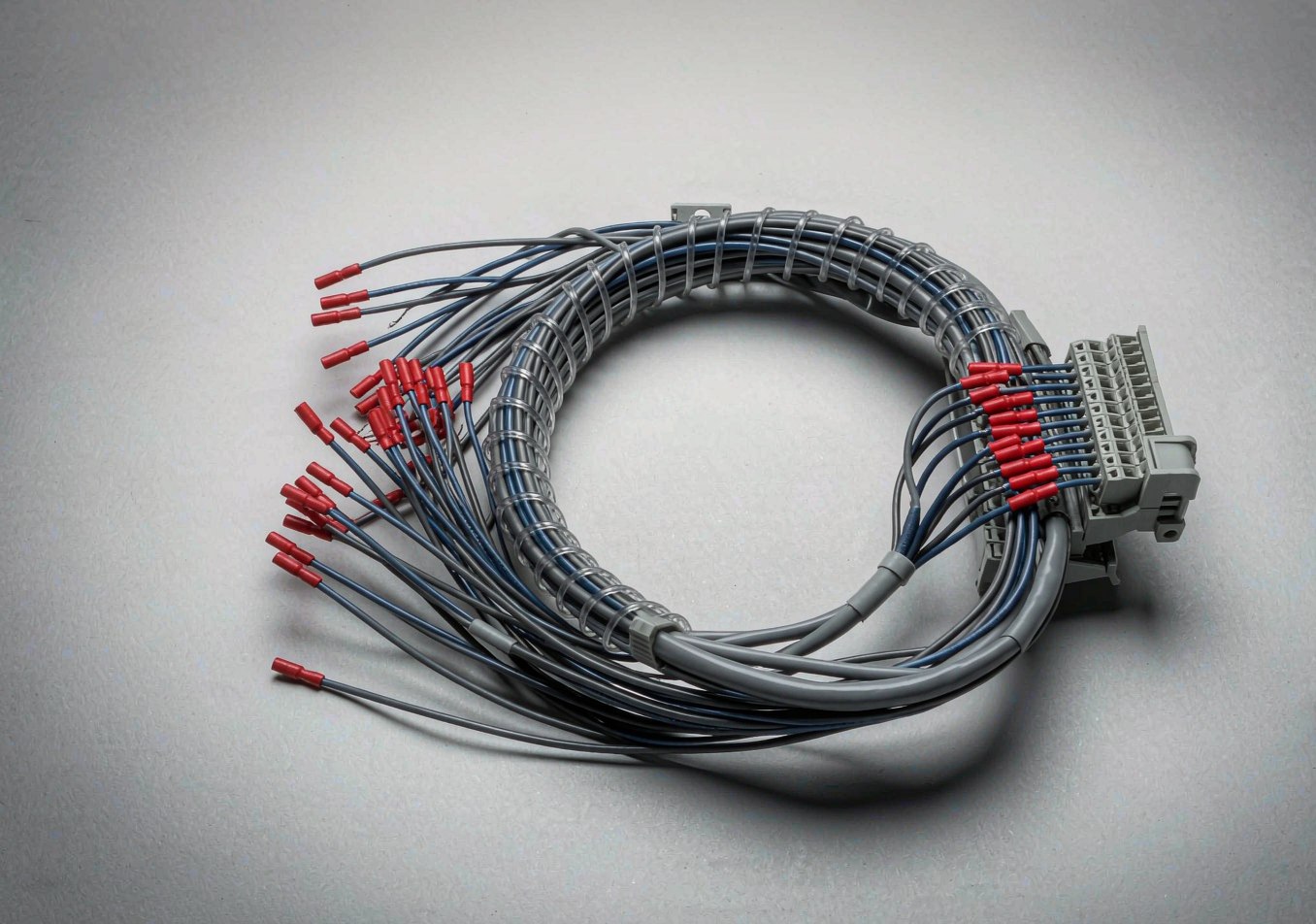
Power and control are loomed separately because the conductor sizes and the terminating methods differ. Power conductors in 16 to 2 AWG take tubular or ring lugs and are routed in their own sections; control conductors take bootlace ferrules and printed identification, and are loomed in sections of ten to sixty so each section can be installed and rung out independently.
Where the schedule calls for 1000 V insulation, UL1032 covers it at 90 °C, and the 600 V work is carried by UL1015 and UL1028 with UL1283 available where the conductor runs to 2 AWG.
How we build it
- Power and control loomed as separate sections for independent installation
- Bootlace ferrules colour-coded by conductor size on every control end
- Printed circuit numbers keyed to your wiring schedule and terminal list
- Heavy-gauge lugs for 16 to 2 AWG power conductors, crimped and pull-tested
- CT shorting links and phase marking built in where the schedule specifies them
- Continuity rung out section by section before the loom is packed
Wire we build this harness on
Every conductor is Xinya wire from this site's own catalogue, so the style inside the harness can be traced to a published data sheet. These are the lines most often specified for this application:
- UL1015 600 V 105 °C PVC hook-up wire
- UL1028 600 V PVC hook-up wire to 8 AWG
- UL1283 600 V 105 °C PVC wire, 2–8 AWG
- UL1032 1000 V 90 °C PVC hook-up wire
- H07V-K 450/750 V harmonised cable
- UL2405 300 V multi-conductor cable for control runs
If your drawing names a style that is not listed here, ask — the catalogue published on this site is a subset of what the factory runs, and we can quote against a style number as easily as against a description.
How to get a quotation
Send the drawing, the sample, a photograph with a scale in shot, or a table of from-to points. Our reply names the wire style, the connector series, the crimp specification, the sleeving and the test method, so your engineers can approve the part rather than interpret a description. Nothing on this site carries a price: every harness is quoted against the specification you provide.
Request a harness quotation Not sure which wire? Use the wire selector